⚠️ Quick check: Before reading this guide, take 2 minutes to calculate your personal AMS risk score — the world’s first altitude sickness calculator built specifically for motorcycle riders. Free, no login.
Altitude Sickness on Himalayan Motorcycle Tours Kills More Riders Than Crashes
Not from crashes. Not from mechanical failures on remote mountain roads.
From Altitude Sickness on Himalayan Motorcycle Tours — something most of them never took seriously, because they felt completely fine when they landed in Leh.
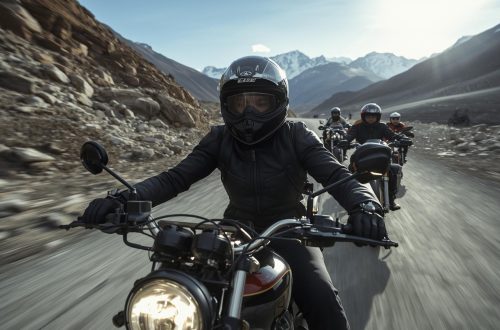
In 16 years of guiding riders on Himalayan motorcycle tours, our team at Stoneheadbikes has watched fit, experienced, confident riders get helicopter-evacuated from Khardung La. We have seen strong athletes turn back from Spiti Valley unable to breathe. And we have heard of riders who never came home at all.
This guide exists because of those riders. It covers everything you need to know about Altitude Sickness on Himalayan Motorcycle Tours — what it is, why bikers face unique risks, how to prevent it, and what to do if it hits anyway.
What Is Altitude Sickness on Himalayan Motorcycle Tours?
Acute Mountain Sickness (AMS) occurs when your body ascends faster than it can adapt to reduced oxygen levels at high altitude. At sea level, your blood carries 95–100% oxygen saturation (SpO₂). At Leh (3,524m), this typically drops to 82–90%. At Khardung La (5,359m), it can fall to 70–80%. At Mig La — the world’s highest motorable road at 5,913m, opened by BRO in October 2025 — below 65%.
Your brain, muscles, and reflexes are operating at half capacity. On a narrow Himalayan pass with a sheer drop on one side.
This is why Altitude Sickness on Himalayan Motorcycle Tours poses a uniquely serious risk that trekkers and tourists simply do not face:
- A motorcycle can take you from Manali (2,050m) to Baralacha La (4,890m) in a single morning — a 2,840-metre gain in altitude in hours
- Riders are exposed to wind chill that accelerates dehydration and temperature drops, worsening symptoms
- Solo riders have no one to notice early warning signs
- Riding demands concentration and physical coordination — exactly what AMS compromises first
- Experienced riders are more likely to push through symptoms because they mistake them for fatigue
The cruellest aspect of AMS is this: physical fitness provides zero protection. Oxygen partial pressure at 5,000m is the same for an Olympic athlete as it is for someone who never exercises. In fact, very fit riders are often at higher risk because they ascend faster and have a higher threshold for discomfort — which makes them more likely to ignore early warning signs.
AMS Symptoms Every Himalayan Rider Must Know
Symptoms typically appear 6–12 hours after ascent. Know these in order of severity:
Mild AMS — Stop Ascending
(NHS Altitude Sickness Reference · Mayo Clinic: AMS Symptoms)
- Headache (especially on waking) — the first and most reliable indicator
- Nausea or loss of appetite
- Fatigue beyond what the riding explains
- Mild dizziness
What to do: Do not ascend further. Rest at the same altitude. Hydrate aggressively (4–5 litres of water). Take ibuprofen 400mg for headache. Monitor closely for 24 hours.
Moderate AMS — Serious Warning
- Persistent or worsening headache not relieved by ibuprofen
- Vomiting
- Extreme weakness — difficulty walking in a straight line
- Severe fatigue at rest
What to do: Descend immediately. Even 300–500 metres of descent can dramatically relieve symptoms. Do not ride alone. Consider Diamox if you have it.
Severe AMS — Emergency (HAPE / HACE)
- Shortness of breath at rest — this indicates HAPE (High Altitude Pulmonary Edema)
- Confusion, disorientation, inability to walk straight — this indicates HACE (High Altitude Cerebral Edema)
- Bluish lips or fingernails (cyanosis)
- Persistent cough with pink or frothy sputum
What to do: DESCEND IMMEDIATELY. This is a life-threatening emergency. Call 108 (emergency services, Ladakh) or SNM Hospital Leh at 01982-252-012. Do not wait to see if it improves.
The 9 Risk Factors That Determine Your Personal AMS Risk
Not every rider is equally vulnerable. Your individual AMS risk depends on a combination of factors that interact in ways most general guides don’t account for:
- Your destination altitude — Mig La (5,913m) and Umling La (5,799m) carry extreme risk; Khardung La (5,359m) very high; Spiti (4,590m) high
- Your arrival method — flying to Leh (worst) vs riding Manali–Leh (moderate) vs Srinagar–Leh (best gradual ascent)
- Your home altitude — a rider from Bogotá (2,640m) or Addis Ababa (2,355m) has far better baseline acclimatisation than a rider from Mumbai (6m) or London (11m)
- Your AMS history — previous episodes are the strongest predictor of future risk
- Rest days planned in Leh — the single most impactful preventable factor
- Your age — under 18 and over 60 carry elevated risk
- Your fitness level — counterintuitively, very fit riders carry slightly higher risk due to faster ascent and higher symptom threshold
- Pre-existing cardiovascular or respiratory conditions
- Medication — Diamox reduces risk significantly
💡 Know exactly where you stand: We built a free AMS risk calculator that scores all 9 factors based on your specific profile — the world’s first built specifically for motorcycle riders. Takes 2 minutes.
The Key Himalayan Passes and Their Altitude Risk Levels (2026)
| Pass / Location | Altitude | Route | AMS Risk |
|---|---|---|---|
| 🏆 Mig La | 5,913m | Changthang Plateau | EXTREME ⚠️ |
| 🌐 Umling La | 5,799m | Eastern Ladakh | EXTREME |
| Chang La | ≈5,360m | Leh → Pangong Tso | VERY HIGH |
| Khardung La ✦ | 5,359m | Leh → Nubra Valley | VERY HIGH |
| Tanglang La | 5,328m | Manali–Leh Highway | VERY HIGH |
| Baralacha La | 4,890m | Manali–Leh Highway | HIGH |
| Kunzum Pass | 4,590m | Spiti Valley entry | HIGH |
| Leh City | 3,524m | Acclimatise here | MODERATE |
✦ Khardung La GPS-verified at 5,359m by Survey of India. Old BRO signboard (18,380 ft) was inaccurate. 🏆 Mig La opened October 2025 — tourist access restricted as of May 2026, verify permits before planning.
The Complete Acclimatisation Plan for Himalayan Motorcycle Riders
The Wilderness Medical Society (WMS) recommends a maximum sleeping altitude gain of 300–500 metres per day above 3,000m. Understanding this is essential for managing Altitude Sickness on Himalayan Motorcycle Tours. The specific protocol depends on how you arrive:
If You Are Flying Into Leh
This is the highest-risk scenario. You go from your home city to 3,524m in 75 minutes with zero physiological preparation.
- Day 1 (Arrival): Land, check in, REST. No sightseeing, no stairs, no exercise. Drink 4 litres of water. Eat light. A mild headache is normal and expected.
- Day 2: Continue resting. A short, flat walk only. No alcohol. Monitor your SpO₂ with a pulse oximeter if you have one.
- Day 3: Short acclimatisation ride to 3,700–4,000m (Sangam viewpoint, Magnetic Hill). Return to sleep in Leh — do not stay at higher altitude overnight.
- Day 4+: You are ready for the high passes. Carry your pulse oximeter and emergency contacts.
If You Are Riding the Manali–Leh Highway
- Day 1: Manali to Jispa (3,100m) via Rohtang Pass (3,978m). Gradual ascent. Hydrate throughout.
- Day 2: Jispa to Leh via Baralacha La (4,890m) and Tanglang La (5,328m). Long day — arrive and rest immediately. Do not attempt any pass today.
- Day 3: One mandatory rest day in Leh even if you feel fine.
- Day 4+: High pass riding begins.
If You Are Riding the Srinagar–Leh Highway
This is the safest arrival route — the most gradual altitude gain over two days via Kargil (2,676m). Even so, plan one rest day in Leh before riding above 4,500m.
Diamox (Acetazolamide) — The Evidence-Based Prevention Aid
Diamox (Acetazolamide 125–250mg, twice daily) is the only medication with strong clinical evidence for both preventing and treating Altitude Sickness on Himalayan Motorcycle Tours. It works by stimulating deeper, faster breathing — helping your blood absorb oxygen more efficiently at altitude.
Key facts for riders:
- Start 24 hours before your ascent begins
- Continue for 48 hours after reaching your maximum altitude
- Side effects: tingling in fingers and toes (harmless), increased urination, carbonated drinks tasting flat
- Contraindicated in sulfa drug allergies — consult your doctor before use
- Available on prescription in India; most travel medicine clinics will prescribe it for a Ladakh trip
- It is NOT a substitute for acclimatisation — it is a useful aid alongside it
Your Essential Safety Kit for Altitude Sickness on Himalayan Motorcycle Tours
- ✅ Pulse oximeter (SpO₂ meter) — ₹500–1,500 online, most important piece of kit. Below 70% at rest + symptoms = descend immediately
- ✅ Diamox tablets — bring even if you don’t plan to take them
- ✅ Ibuprofen 400mg — first-line treatment for AMS headache
- ✅ Oral Rehydration Salts (ORS) — altitude causes significant fluid loss
- ✅ Portable oxygen can — available in most Leh pharmacies
- ✅ Emergency numbers saved offline — SNM Hospital Leh: 01982-252-012, National Emergency: 108
- ✅ Travel insurance with helicopter evacuation cover — mandatory for serious Himalayan riding
What About Mig La and Umling La — The World’s Two Highest Motorable Roads?
Mig La (5,913m) was opened by BRO Project Himank on 1 October 2025, surpassing Umling La to become the world’s highest motorable road. As of May 2026, tourist access to Mig La remains restricted — verify the latest permit requirements with Leh District Administration (LAHDC) before planning a visit.
Umling La (5,799m) is accessible with an Inner Line Permit and has become a bucket-list destination for Himalayan riders since it opened in 2020–21. At 5,799m, roughly 55% of sea-level oxygen is unavailable. For both passes, the minimum requirements are: 3+ rest days in Leh, Diamox, a pulse oximeter, a riding partner, and full evacuation insurance. Visits should be kept brief — 30–60 minutes maximum at the summit.
Golden Rules Every Rider Must Follow to Survive Altitude Sickness on Himalayan Motorcycle Tours
- If you have any AMS symptoms, do NOT ascend further
- If symptoms are moderate or severe, descend immediately — even if it ruins your itinerary
- Minimum 2 rest days in Leh before any pass above 4,500m (3 if you flew in or have AMS history)
- Fitness does not protect you
- The mountain will always be there next year. You only get one life.
Know your risk before your engine starts.
⛰️ Free AMS Risk Calculator — 2 Minutes
World’s first built specifically for motorcycle riders · No login · Covers 50+ countries
Frequently Asked Questions — Altitude Sickness on Himalayan Motorcycle Tours
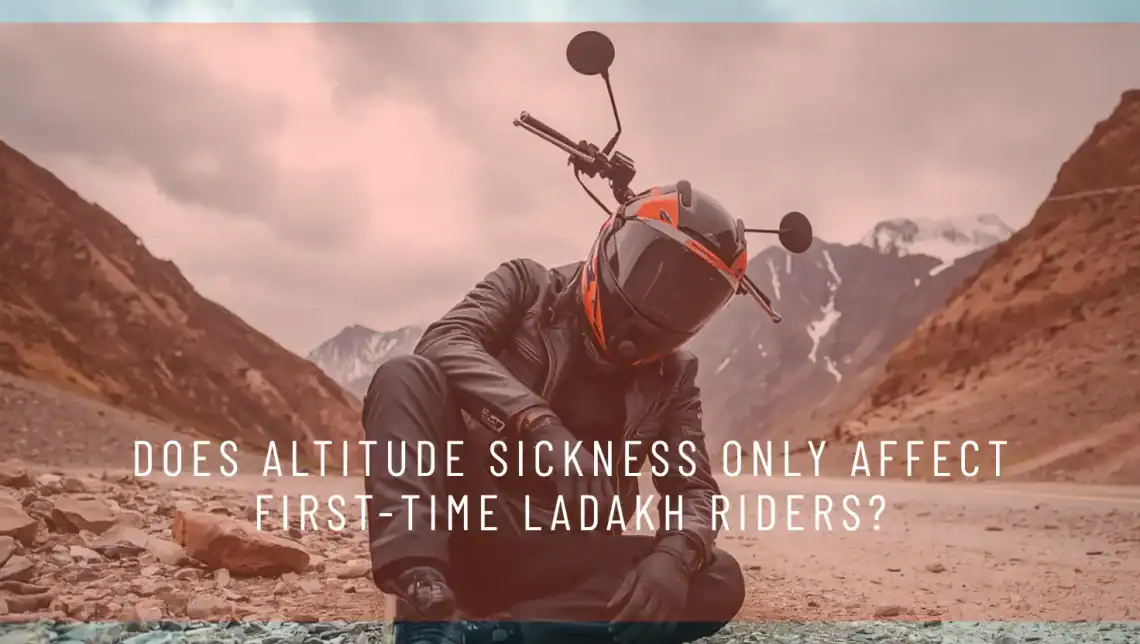
Does altitude sickness only affect first-time Ladakh riders?
No. Having completed a Ladakh trip before without symptoms does not guarantee immunity on your next trip. AMS susceptibility varies from visit to visit depending on how quickly you ascend, your home altitude, your hydration, and other factors. Always acclimatise properly regardless of how many times you have ridden these routes.
Can I drink alcohol in Leh during acclimatisation?
Alcohol suppresses the hypoxic ventilatory response — the breathing reflex your body uses to compensate for lower oxygen. Even one or two drinks in the first 48 hours at altitude can meaningfully worsen acclimatisation. Avoid alcohol completely for the first two days in Leh.
Is the Srinagar–Leh route safer than Manali–Leh for altitude sickness?
Yes, moderately. The Srinagar–Leh route via Kargil (2,676m) provides a more gradual altitude gain over two days compared to the sharper ascent on the Manali–Leh highway. However, one rest day in Leh remains essential on either route before attempting passes above 4,500m.
How long should I stay at Khardung La summit?
30–45 minutes maximum. The summit at 5,359m is not a place to linger. Take your photos, check your SpO₂, drink some water, and descend. The longer you stay at extreme altitude without proper acclimatisation, the more your condition can deteriorate.
What is a normal SpO₂ reading at altitude?
Sea level: 95–100%. Leh (3,524m): 82–90% is normal during the first few days. Passes above 5,000m: 70–80% is common and not immediately dangerous if you feel well. Below 70% at rest, combined with symptoms, is the threshold for immediate descent.
Are there hospitals in Leh that treat altitude sickness?
Yes. SNM Hospital (Sonam Nurboo Memorial Hospital) on Fort Road, Leh is the primary AMS treatment facility with an altitude medicine ward. Emergency number: 01982-252-012. The Army Base Hospital may assist civilians in life-threatening cases. National emergency number across Ladakh: 108.
This guide is based on the 2019 Wilderness Medical Society Consensus Statement on Altitude Illness. It is for educational purposes and does not constitute medical advice. Consult a qualified physician before your trip, especially if you have pre-existing health conditions.
Khomendra Singh is the founder of Stoneheadbikes, India’s leading motorcycle rental and Himalayan tour company since 2009 with over 1,200 guided Himalayan tours completed. Official Royal Enfield rental partner.